
Ride Freebee
FreebeeTravel & Local
4.11.17K Reviews
- Version
- 2.17.1
- Installs
- 100.00K
- Age Rating
- Everyone
Screenshots
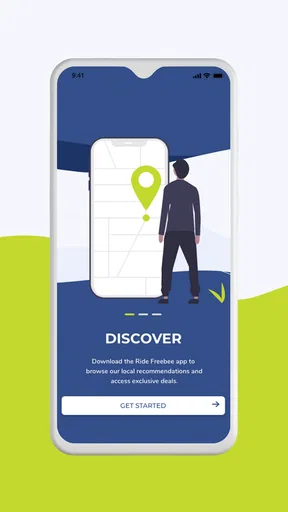
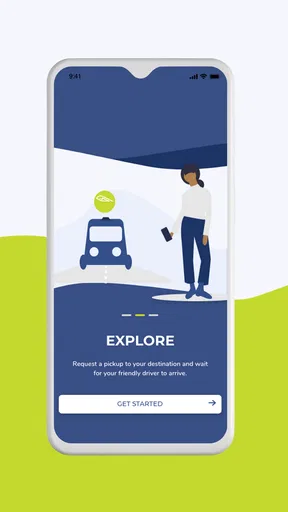

Our Review of Ride Freebee
 Analysis by Appyee
Free local transport sounds simple until the practical questions begin: where does it operate, what does the ride request require, and how much personal control do I keep while using it? Ride Freebee is built around that narrower travel problem rather than trying to replace every map, taxi, or public-transit tool on my phone. Developed by Freebee, it sits in the Travel & Local category and presents itself as a way to ride without paying a fare.
After using it as a focused transport app, I found its appeal easy to understand. When the service is available in the area I need, it can be a more direct choice than comparing taxi prices or piecing together a short journey with several transit tools. The important qualification is that this is not a universal ride-hailing replacement. Its usefulness depends heavily on local coverage, service availability, and whether the trip fits the kind of short, practical movement the app is intended to support.
My main takeaway is that Ride Freebee is most convincing when treated as a local mobility option, not as an all-purpose travel companion. That distinction matters for trust as much as convenience. A user should know what the app is asking for, what information is necessary at each stage, and when a conventional map, bus app, walking route, or paid ride service is the safer fallback.
What the app is really for in everyday travel
The store summary says “Welcome Aboard!” and the short description reduces the idea to “Ride Freebee.” In practice, the value is the gap between a destination that is too far to walk comfortably and a journey that feels excessive to arrange through a paid service. I see it as particularly suited to short local hops: getting between nearby attractions, moving around a district, or covering the final stretch after arriving by another form of transport.
A realistic example would be an afternoon in an unfamiliar area. I might leave a hotel, spend time at a shopping or dining district, and then need to reach another nearby stop without returning to a car. Instead of opening a general ride-hailing app, checking a fare, and deciding whether the price is worthwhile, I can check whether this service is a practical option. If it is operating where I am, the app may remove a surprising amount of friction from that small journey.
That scenario also shows where expectations need to stay realistic. I would not plan an important airport connection around it unless I had already confirmed that the service was suitable for that exact trip. A free ride can be useful, but “free” does not automatically mean immediate, available, or appropriate for a time-sensitive itinerary. For flights, medical appointments, long-distance transfers, or journeys with luggage, a scheduled transport option may be the wiser choice.
Ride Freebee is free to download and is marked for Everyone, which makes the basic proposition approachable for a broad audience. It was released on September 30, 2015, and the current version is 2.17.1, with Android support beginning at version 7.0. Those details suggest a product intended to remain accessible across a range of devices rather than one limited to only the newest phones.
The app’s public reception is also meaningful without being a guarantee. It has an average rating of 4.1 from around 7,400 ratings, with roughly 1,200 written reviews, and has passed 100,000 installs. I read that as evidence of a real user base and a generally positive impression, not proof that every ride will be smooth. Local transport apps can be judged very differently depending on where and when they are used.
Trust begins with the service area, not the download button
My first practical check would be location. A transport app can look polished and still be of little use if its operating area does not cover the places I visit. Before depending on it, I would open the app while planning the outing, inspect whether the relevant pickup and destination areas are supported, and keep an alternative ready. This is a better workflow than discovering the limitation after leaving a station or venue.
That habit also protects personal information. If the app does not need to be used for a particular journey, there is no reason to keep interacting with it simply because it is installed. I prefer to open a location-based service when I have a clear transport task, make the necessary choices, and close the process once the journey is finished. It keeps the app’s role defined and makes it easier to notice what the app is requesting.
Freebee’s developer identity is visible as Freebee, which gives the app a clear point of responsibility rather than leaving users to guess who operates it. Still, I would not confuse a recognizable developer name with a complete privacy explanation. Trust should come from the controls and disclosures a person can actually inspect before requesting a ride.
Permissions and data choices deserve a deliberate look
Because this is a location-dependent transport app, I would pay close attention to any permission prompt that appears during setup or use. The right response is not to approve everything automatically. I would read each request, consider whether it is needed for the current task, and choose the least broad option offered by the phone when that still allows the service to work.
This is especially important when using the app in a new place. A user may be tempted to grant access quickly because they are standing outside and want transport immediately. My advice is to pause long enough to distinguish a request that supports the active ride from a request that affects ongoing access. If the operating system offers a one-time or while-using choice, I would favor that over an unrestricted setting unless there is a clear reason not to.
I also avoid entering extra personal details simply to make an account feel complete. For a short local ride, information should have a clear purpose. If a field is optional, I leave it blank until I understand why it helps. This is not an accusation against the app; it is a sensible habit for any service that connects identity, location, and movement.
Another useful check is the phone’s permission manager after the first trip. I would review whether location access remains enabled and whether notifications are still welcome. If I only use Ride Freebee during a holiday or occasional outing, I may turn off permissions or notifications between trips and restore them when needed. That small maintenance step gives me more control than relying on the original setup screen.
Moments when personal information feels most sensitive
The most sensitive part of this type of app is not necessarily the ride itself; it is the combination of where I am, where I want to go, and when I am making the request. A pickup point can reveal a hotel, workplace, home area, or private appointment. I therefore avoid requesting rides from places where I would rather not expose an exact position unless the service requires it and I am comfortable with that trade-off.
When possible, I would choose a sensible public pickup point instead of standing directly outside a private address. That can improve privacy and sometimes make the vehicle easier to locate. It also reduces the chance of sharing more precise location information than the journey actually needs. The trade-off is convenience: walking to a nearby public point may be less effortless, but it gives me a clearer boundary around my location.
I would apply the same care to destination entry. Typing a full address may be necessary for some trips, yet a recognizable public venue can be preferable when it serves the same purpose. I would check the destination before confirming because an incorrect place can create both a travel problem and unnecessary location exposure.
Notifications are another small but important detail. Ride updates can be useful when I am waiting, but notification previews may appear on a locked screen. If I am traveling for work or handling a private appointment, I would adjust the phone’s preview settings so that transport details are not visible to anyone nearby. That is a device-level choice, but it directly affects how discreet the app feels in daily use.
How much control the rider keeps
A good transport experience should leave the rider able to make clear decisions rather than pushing them through a vague request flow. I look for understandable pickup and destination choices, an obvious confirmation step, and a way to recognize whether I am still planning or have already committed to a ride. Those distinctions matter when I am distracted, carrying bags, or navigating an unfamiliar street.
My preferred workflow is simple. I first decide whether the trip is suitable for a free local service, then check the pickup area, confirm the destination, and only afterward submit the request. I do not begin by pressing every prominent button just to see what happens. This order gives me a chance to catch mistakes before they become a cancellation or a confusing wait.
I would also keep an eye on account controls. If the app offers profile, sign-out, notification, or saved-location settings, I would review them rather than leaving defaults untouched. A shared phone deserves extra care: I would sign out when appropriate, avoid saving private destinations, and make sure another person cannot casually open an active travel session.
For families, the Everyone rating makes the app broadly approachable, but that does not remove the need for supervision. A parent or guardian should explain what location sharing means, who is making the request, and how to recognize the correct pickup. Younger users may focus on the promise of a free ride and overlook the personal information involved in arranging it.
There is also a practical form of user agency in knowing when to stop waiting. If the app does not produce a workable option, I would not keep refreshing indefinitely or repeatedly resubmit the same request. I would switch to a map, public transit, walking directions, or a paid service. The app should support my plan, not control it by making me feel committed to an uncertain outcome.
Where it beats the usual alternatives
Compared with a taxi or conventional ride-hailing service, Ride Freebee’s strongest advantage is obvious: it can remove the fare from a suitable local trip. That changes the decision for short distances where a paid ride feels disproportionate. It can also be less mentally tiring than comparing prices when the goal is simply to move around a compact area.
Compared with walking, it is useful when weather, mobility, time, or bags make the distance uncomfortable. Compared with a public bus, it may feel more direct for a short connection, especially when the route would otherwise involve a transfer. Compared with a general map app, it is purpose-built around the ride rather than merely showing possible ways to travel.
Those advantages come with trade-offs. A map app is usually the better starting point when I want to compare walking, cycling, transit, and driving in one view. A public-transit app is preferable when I need predictable routes, stop information, or a journey that extends beyond the local service area. A paid ride service is often the better fallback when I need broad coverage, a specific vehicle type, or a dependable departure time.
The most effective setup is therefore not “Ride Freebee instead of everything else.” I would keep it alongside a mapping tool and one dependable backup. That combination lets me try the free option first without turning a local service into a single point of failure.
Small habits that make the experience safer and smoother
- Check coverage before leaving. I would confirm that both ends of the trip make sense for the service rather than assuming that a nearby location is automatically included.
- Use a public pickup point when practical. This can reduce the precision of the location I share and make it easier to identify where the ride should meet me.
- Review permissions after the first use. I would keep only the access that matches how I actually use the app and disable notifications that no longer help.
- Keep a backup for fixed appointments. A free local ride is convenient, but I would leave extra time and know which alternative I can use if the request does not fit my schedule.
- Protect the confirmation moment. Before submitting anything, I would check the pickup and destination once more, especially when using the app in a crowded place.
These habits are not complicated, but they address the parts of the experience that a short store description cannot explain. They also make the app easier to evaluate honestly. If I need to grant broad access, save more information than expected, or repeatedly fight the interface to arrange a simple trip, that friction changes whether the free ride is worth it.
Who should install it, and who should skip it
I would recommend Ride Freebee to people who regularly move around an area where the service is active and who value a free alternative for short journeys. It makes the most sense for visitors exploring locally, residents handling quick errands, and anyone who wants another option between walking and paying for a car ride.
I would be more cautious if my travel is spread across many cities or if I need one app to plan an entire itinerary. In that situation, a strong map and transit tool will probably be more consistently useful. I would also skip relying on it for a strict arrival deadline unless I had already tested the service and understood the local operating pattern.
Users who are especially sensitive about location sharing should inspect every permission and account choice before requesting a ride. The app may still be suitable, but only if the available controls match their comfort level. Someone unwilling to share the location needed to arrange local transport will likely find a walking or public-transit option easier to manage.
My final view after weighing convenience against control
Ride Freebee has a clear and appealing purpose: it can make short local travel easier without adding a fare. I like that focused role, and I can see why the app has attracted a substantial audience since its release. The free price and broad age rating lower the barrier to trying it, while the current version keeps it relevant for supported Android devices.
My recommendation is conditional but positive. Install it if the places you visit fall within its service area, use it for flexible local trips, and treat the first journey as a test rather than a promise that every future trip will work the same way. Check permissions, avoid sharing more location detail than necessary, and keep a backup for anything time-critical.
In my experience, the app earns trust when I remain an active participant in the process: I decide when location access is useful, I verify the pickup and destination, and I know when to choose another transport method. That makes it a worthwhile addition for local mobility, but not a replacement for the broader planning and reliability offered by maps, transit tools, or paid ride services.
Verdict
Strengths of Ride Freebee
- Free rides make short trips more affordable.
- Electric vehicles offer a quieter, cleaner way to travel.
- Useful for connecting with nearby businesses and attractions.
- Simple booking process through the mobile app.
- Helpful option for local events and community transportation.
Limitations of Ride Freebee
- Service availability is limited to selected cities and zones.
- Vehicles may be unavailable during busy periods.
- Operating hours can vary by location.
- Rides may be limited by distance or designated service areas.
- The app may require location access to function properly.
Similar Picks in This Category
View All
Google Maps
Google LLC3.4

Google Maps Go
Google LLC4.1

Booking.com: Hotels & Travel
Booking.com Hotels & Vacation Rentals4.8

Google Earth
Google LLC3.8

Skyscanner Flights Hotels Cars
Skyscanner Ltd4.8

trivago: Compare hotel prices
trivago N.V.4.4
Frequently Asked Questions
What is Ride Freebee and how does it work?
Ride Freebee is an on-demand local transportation service designed to help passengers travel around participating communities, often using small electric vehicles or other neighborhood shuttles. After opening the app, you can check whether service is available in your area, enter your pickup and destination, and request a ride. Availability, coverage, vehicle type, and operating hours depend on the city or local partner.
Is Ride Freebee completely free to use?
The service is generally promoted as free for eligible rides within its supported service zones, but users should not assume that every trip or feature is always free. Coverage areas, special events, airport services, private bookings, and partner-operated routes may follow different rules. Before confirming a request, review the information shown in the app and check local terms, because availability and pricing policies can vary by location.
Where is Ride Freebee available?
Ride Freebee is not available everywhere, so the app is most useful in cities, neighborhoods, resorts, business districts, or communities where the service has an active operating partnership. Coverage can also change seasonally or according to demand. When testing the app, enable location access or enter your area manually to see whether rides are currently offered near you and whether your intended pickup and destination fall inside the service zone.
Do I need an account or location permissions to request a ride?
You will typically need to provide basic information and follow the app’s sign-in or registration process before requesting transportation. Location permission is especially useful because Ride Freebee relies on your position to identify nearby vehicles, confirm pickup points, and determine whether your trip is inside the supported zone. If you prefer not to share precise location data, some functions may be limited or require manual address entry.
What should I know about Ride Freebee’s availability and ride experience?
Ride Freebee should be viewed as a convenient local mobility option rather than a guaranteed replacement for a taxi or full-size rideshare service. Pickup times can vary with demand, traffic, weather, vehicle availability, and operating hours. Vehicles may have limited seating and luggage capacity, while accessibility options can differ by location. Plan extra time, confirm the pickup instructions, and contact local support if your ride does not arrive as expected.
